
The short answer
No trumpet is unbreakable, and none is rust-proof in every part. A trumpet wears out part by part: a dent in the wrong place, a slide that won't move, a lead pipe eaten by red rot. A good repair shop can fix most of that, at a price. A carbon bell changes that for one part: it does not dent and does not corrode. The valves, slides and lead pipe are metal on every daCarbo too, so they need the same care as on any trumpet.
You know the moment
The speeches are over and the dance floor fills up. Your horn is on a chair next to the stage, because the stand is still in the car. Then somebody backs into the chair.
A trumpet player listed the usual suspects on a forum: horns "knocked around by drunk audience, other musicians, wind blowing music stands, and banging into things in the dark." Another was rear-ended by a truck on the way home from a gig, and the horn in the car came out dented.
In church or the community band, the risk is quieter: a horn that sits wet in its bag from one rehearsal to the next. And every trombonist knows the sound of a slide hitting the floor.
What actually breaks on a trumpet
- Dents. A dent in the bell is the one everybody sees. A dent in a slide matters more, because a slide has to move. Brass repairer Robb Stewart writes: "Dents in tuning slide tubes can never be fully removed, but need to be moved sufficiently to restore the slide action."
- Stuck parts after a drop. Check that the mouthpiece still comes out and that the valves and slides still move. A stuck mouthpiece is a job for a shop, not for pliers, and some shops do it for free.
- Red rot. The slow one, and the one you can do most about.
What a dent repair involves, and what it costs
The tech's goal, in Robb Stewart's words, is "to move the metal back, as close as possible." For a bell, that can mean a cone-shaped mandrel and burnishers. Dents the tech can reach without taking the horn apart are the quick, cheap kind. If a part has to be unsoldered first, it takes longer and costs more. The lacquer often suffers: where the metal stretches, it can craze, turn milky and flake off, and new lacquer is the expensive part.
Two US shops list prices online (checked on 9 November 2026). Hickey's Music Center in Ithaca, New York, charges $80 for a general trumpet service, which includes roughing out the dents it can reach without unsoldering. Houghton Horns in Texas charges $120 an hour for dent work. Both give free estimates, so ask first.
For a gigging player, the bigger cost is time. A trombonist whose slide got dented mid-gig, with a second show that night, was told on Reddit: "You can't fix a dented slide between shows."
Red rot: what it is and how to slow it
Red rot shows up as pink or reddish spots on the brass. One owner wrote on Reddit that it felt "like I'm having a Damocles sword above my head."
Brass is copper and zinc. Acid and moisture from your mouth pull the zinc out and leave weak, reddish copper behind. Real red rot starts inside the tube and works its way out, so by the time you see a spot, the wall is already thinner. The lead pipe is the most common place: it's the first stop for everything that comes out of your mouth.
It can't be undone, only slowed. Once it has gone far enough, the tube gets patched or replaced. What slows it, according to repair techs and teachers:
- Get the water out after every session. Empty the water key, then pull a swab through.
- Clean the lead pipe. Run a snake through it now and then, rinse with clean water and let it dry.
- Give the horn a proper bath about once a month.
- Mind what you drink before you play. Soda and coffee add acid. Rinse your mouth first.
- Don't store it wet. Empty it before it goes into the bag for the week.
- If you're buying: lead pipes of gold brass, red brass or nickel silver resist red rot better than yellow brass.
How long does a trumpet last?
There is no fixed number. A trumpet ages part by part, and most parts can be repaired or replaced. A full overhaul is meant to bring a tired horn back "as close to like-new condition as possible," as Hickey's puts it. There it costs $550 for a student trumpet and $845 for a pro trumpet, parts extra.
Bag, stand and car
- Between sets: stand or bag. Never a chair, the floor or the edge of the stage, and the stand goes where nobody walks. One player wrote: "wife's trumpet got stood on back stage."
- In the car: back seat, not the trunk. After that rear-end crash, another player replied that it's "a common circumstance for horns in repair shops, and the reason I recommend keeping it in the center of the back seat."
- At home: out of reach. "With 2 kids in the house my trumpets have to remain pretty secure," a teacher wrote.
What a carbon bell changes, and what it doesn't
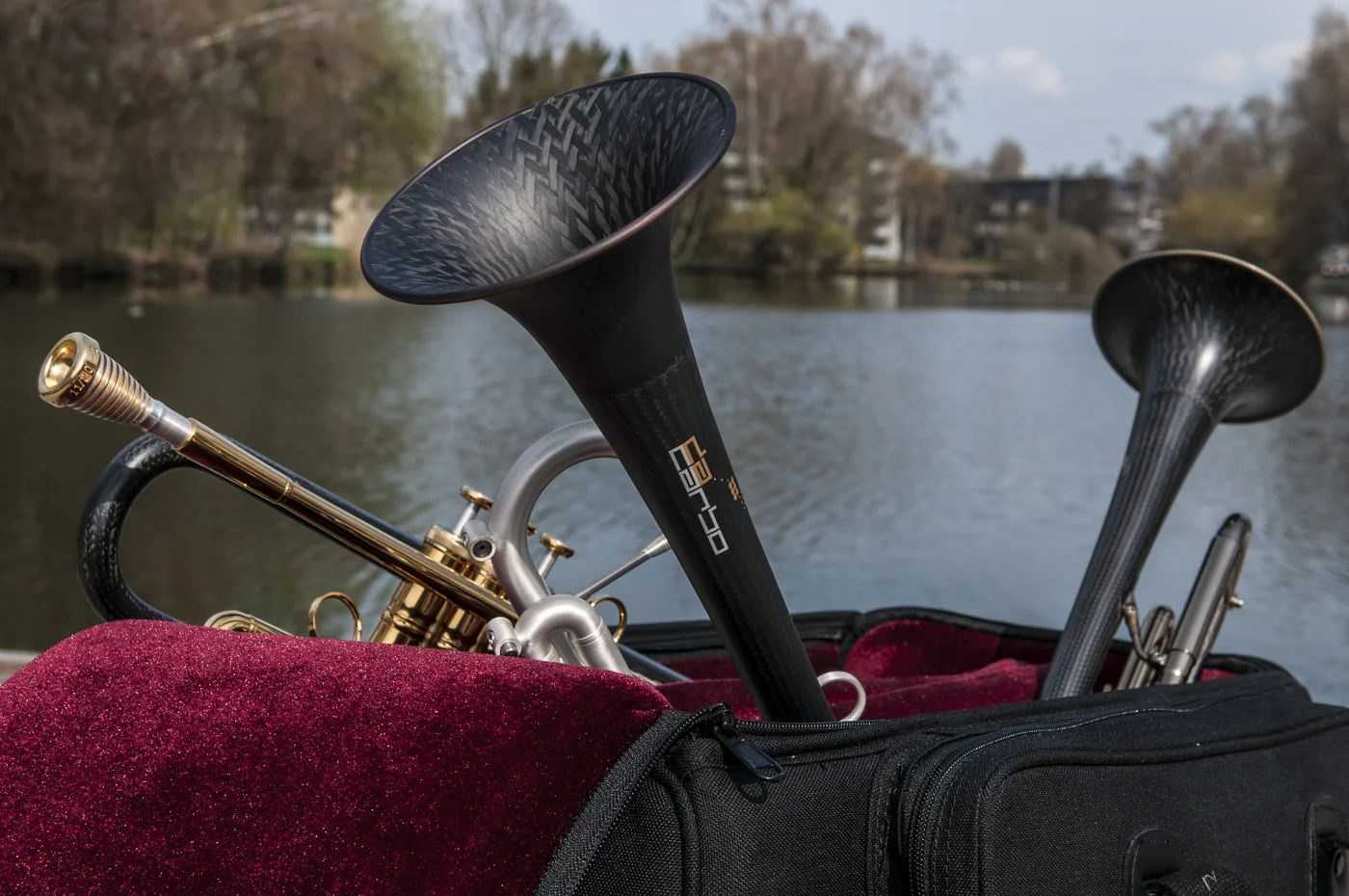
daCarbo trumpets, flugelhorns and trombones have a carbon bell. You can feel a brass bell vibrate in your hands while you play: that is energy you put in that never becomes sound. A carbon bell barely vibrates, and in a blind test, listeners could not tell carbon from brass. The whole story: carbon fiber trumpet vs brass.
If your horn gets knocked backstage or tips off its stand at home, the carbon bell does not dent. It does not corrode either. Five times stronger than it needs to be. None has broken since 2009. Andi Keller, the founder of daCarbo, says in one of his videos that everything else on the instrument would give way before the bell cracks. One bell was run over by a car and survived. The rest of that trumpet went to a repair shop, though.
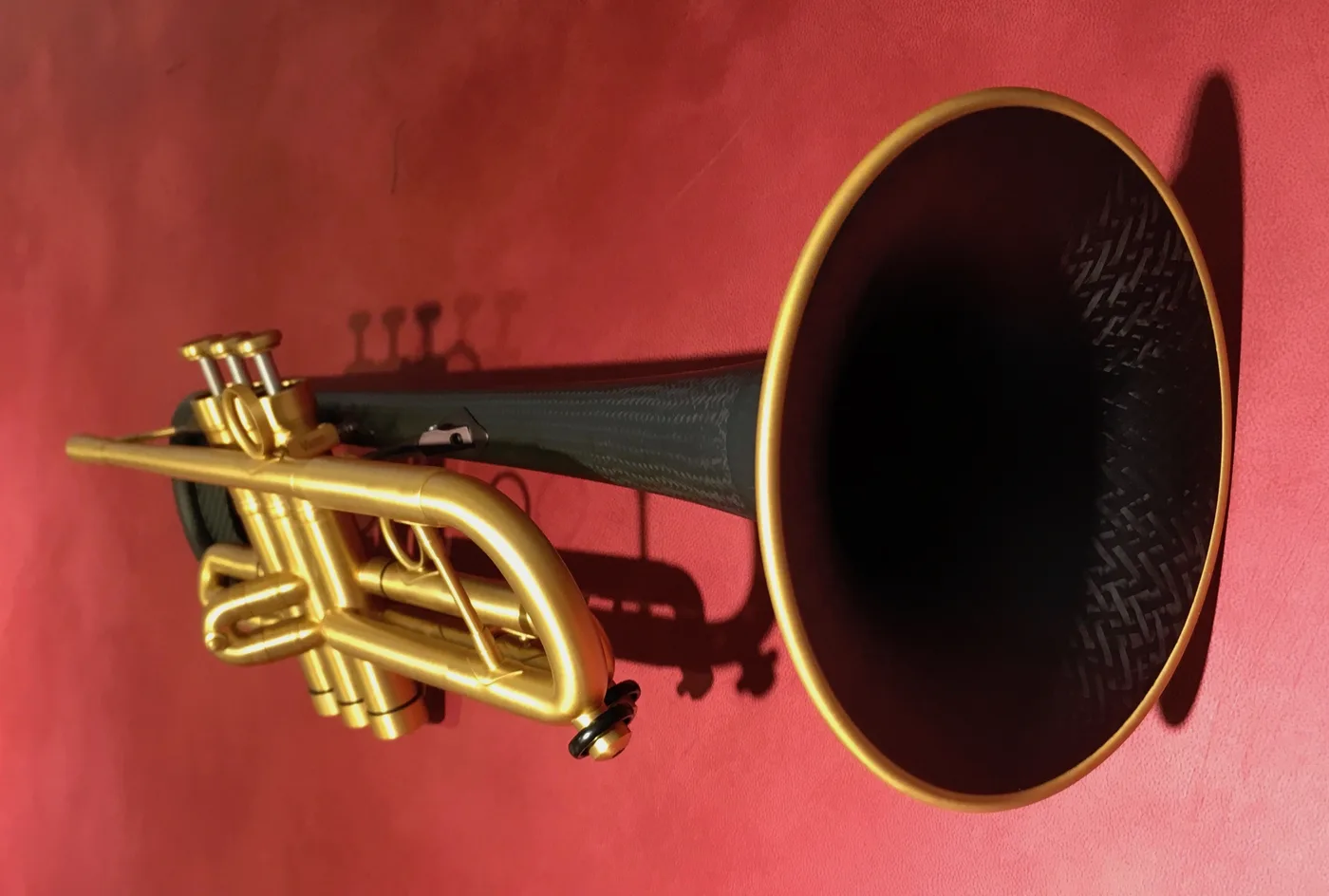
Which parts are carbon, model by model:
- Toni Maier and Large: the whole bell, including the bow at the back of the horn.
- Unica and ChangeMaker trumpet: the bell from the middle valve to the rim. The bow at the back is brass.
- Flugelhorns: the bell and the bell tube.
- Trombones: the bell and the straight tubes of the outer slide. The slide bow and the valve parts are metal.
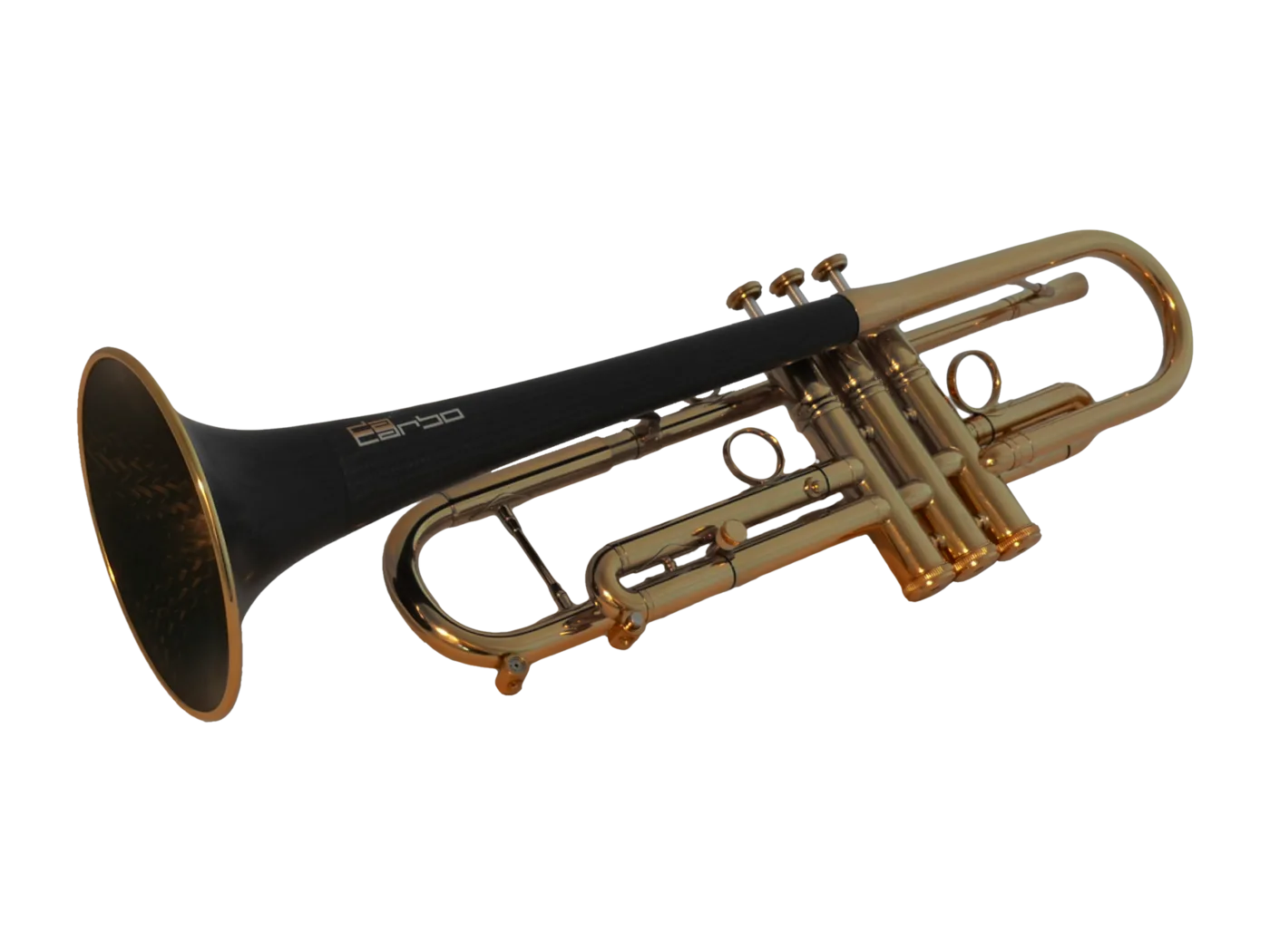
That goes for the carbon bell. The brass parts can still dent, like on any instrument. The lead pipe, valves and slides need the red rot routine too.
Three players, three risks
- If you play gigs, your risk is the crowded stage. The carbon bell does not dent when someone knocks your horn. Use the stand anyway: the valves are metal.
- If you play in church or a community band, it's the long week between rehearsals. Dry the horn before it goes into the bag.
- If you play trombone, it's the slide. The carbon outer slide cannot bend and cannot dent. The slide bow is metal, so don't stand the trombone on it. More in is a carbon fiber trombone worth it?
Check yours tonight
After you play tonight, look along your lead pipe and tuning slide under a bright lamp. Pink or reddish spots? Show them to a repair shop before they turn into a hole, and start the routine above.
If you want a bell that doesn't dent: daCarbo trumpets and trombones start at €2,990, flugelhorns at €4,690. The price includes tax, customs duty and shipping. You have 30 days to send it back from the day it arrives.
All instruments and prices: dacarbo.ch
Want to know how one would hold up at your gigs, or what happens if it ever needs a repair? Book a free 30-minute video call with Andi. The call is free and commits you to nothing.
Sources
- Horn Matters, "Ask Dave: What is Red Rot?" (2011)
- Griffin, A. D.: "Cleaning Trumpets", The Instrumentalist, June/July 2015
- Robb Stewart Brass Instruments, "A Few Ideas About Removing Dents"
- Dawkes Music, "Trumpet Repairs: Bell Recovery" (2022)
- Hickey's Music Center, brass repair prices (checked 9 November 2026)
- Houghton Horns, repair prices (checked 9 November 2026)
- daCarbo, how the bells are made
- daCarbo, all instruments and prices