The short answer
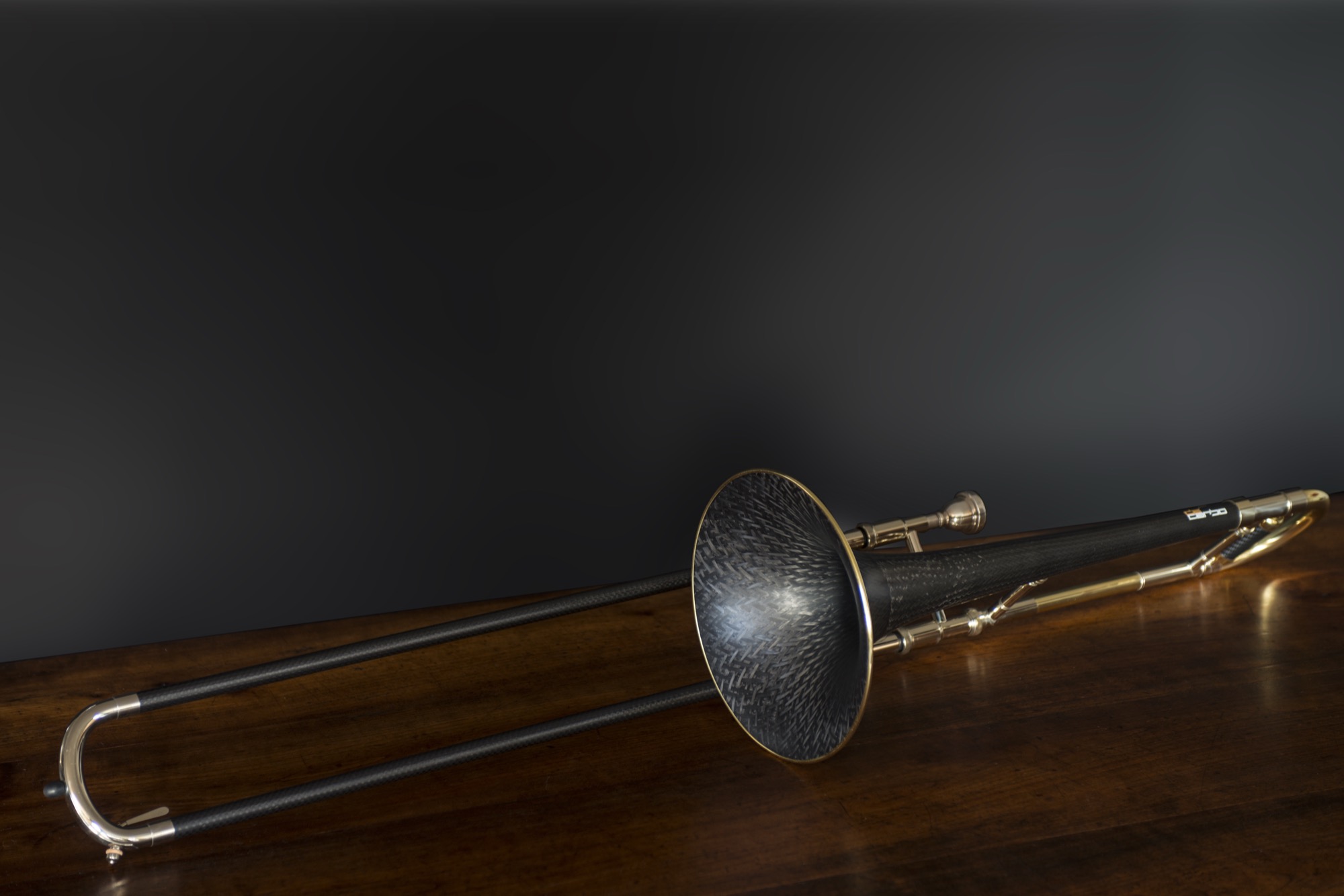
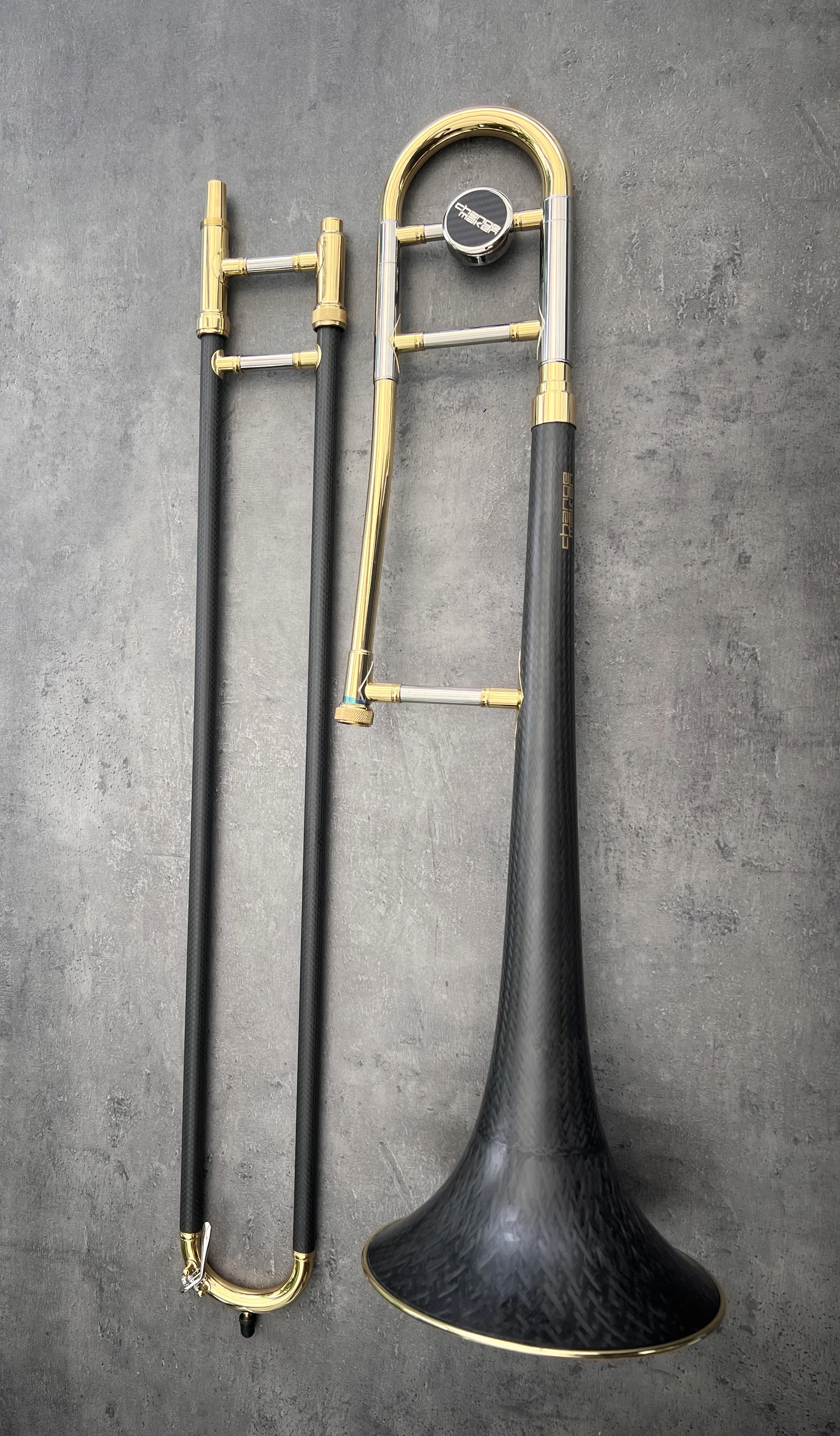
A carbon fiber trombone slide is an outer slide with its two long tubes made of carbon instead of metal. Yamaha, Butler and daCarbo all make trombones with one. On a daCarbo, the bell and the straight tubes of the outer slide are carbon. The slide bow and the valve parts are metal. What changes: the tubes cannot bend or dent, so the slide stays straight. It moves more smoothly, and the balance stays the same in every slide position. What stays the same: the metal bow can still get a dent, and your slide technique is still yours.
One knock is enough
You know how it happens. You put the trombone on its stand at rehearsal, turn around, and catch it with your knee. On a crowded wedding stage, someone steps back into your slide. In a long service, you lean the horn against a chair for a minute, and it slips.
You pick it up and move the slide. You feel the answer in your right hand before you hear a note.
"I thought I loved the horn until I dented the slide," a trombonist wrote on Reddit in September.
Why a straight slide matters
A slide only works when it's straight. The outer slide runs over the inner slide with very little room in between. A small dent or a slight bend, and it starts to drag. Sometimes it stops for good. "Now I can't move it past 3rd position," one player wrote after someone in his marching band hit his slide by accident.
Then the trombone goes to the shop, and that costs you in three ways. Money: one player on TromboneChat put an average slide repair at 50 to 200 dollars, and a badly bent slide can cost several hundred. Time: your trombone can be gone for weeks. And luck, because good slide techs are rare. As one player put it: "slide repair is 50% science, 50% art and 50% luck." Metal has a memory, he added, so even a good repair can come undone.
If it happens at a gig, there's nothing to be done. "You can't fix a dented slide between shows."
Most players accept that as bad luck that comes with the instrument, and mostly it is. But part of it is the material.
What a carbon slide changes
It stays straight
The carbon outer slide cannot bend and cannot dent. On a daCarbo, that means the two long tubes. Andi Keller, the founder of daCarbo, says in his video that they stay straight even if you lean the slide against a music stand.
That has a second benefit, and you feel it as soon as the slide moves. The slide stays straight, so the gap between outer and inner slide is very small and the slide is very airtight. That is good for the response.
Can carbon crack instead? Five times stronger than it needs to be. None has broken since 2009.
A smoother slide
In a fast passage, your right hand stops the slide and starts it again, over and over.
The carbon outer slide is lighter than a brass slide. It moves more smoothly, and quick slide changes take less effort.
That's the outer slide only. The bell is not lighter. If weight matters to you, ask Andi how it compares with the trombone you play now.
The same balance in every position
On a trombone, the balance moves with the slide. Push it out to sixth or seventh position and the weight goes forward, and your left hand holds against it. In a long piece with no rests, that hand does a lot of work you hardly notice. One trombonist only noticed how hard his left hand had been gripping when he put a brace on his horn.
The balance stays the same in every slide position. Your left hand can stay much more relaxed than on a standard trombone.
What stays the same
- Not every part is carbon. The slide bow and the valve parts are metal, and they can dent like on any trombone. The bow is where many slides get hurt: repair techs know the dent that comes from standing a trombone on its slide. So don't do that with this one either.
- Your slide technique is yours. A smooth slide still has to land in the right place, and that comes from practice, not from the material.
- It's no cure. If your shoulder or wrist hurts, see a doctor or a physio first. An even balance changes what your left hand has to hold, nothing more.
- The sound. Nobody hears the difference. In a blind test, listeners could not tell carbon from brass.
The other carbon part: the bell
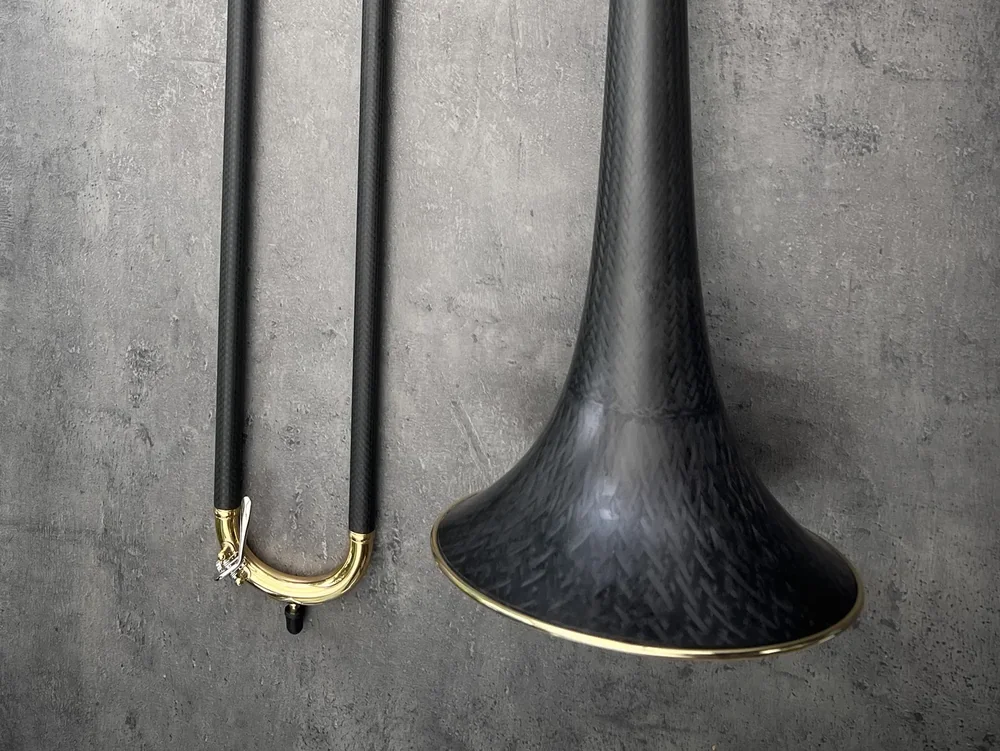
Every daCarbo trombone also has a carbon bell. You can feel a brass bell vibrate in your hands while you play: that is energy you put in that never becomes sound. A carbon bell barely vibrates. How much energy that saves was measured on a trumpet, not on a trombone. The whole story is in our article on carbon and brass.
You may notice one thing yourself: because the bell barely vibrates, you feel less vibration in your hands. Some players need a few days to get used to that.
Three players, one slide
Where you play decides which part matters most.
- If you play paid gigs, you know the stage: stands and cases everywhere, and a bandmate who turns around at the wrong moment. Slide tubes that don't dent are one less worry before the next show.
- If you play in a church, a Posaunenchor or a community band, you know the long piece with no rests, where your left hand holds the horn up the whole time. That's where the balance counts.
- If you play big band or jazz, it's about the fast lines. Quick slide changes take less effort, and an airtight slide is good for the response.
If you want to try it
Start with a free check on the trombone you play now. Next time you practise, move the slide slowly from first position to seventh and back, and watch your left hand. Does it grip harder as the slide goes out? Then check the slide itself: does it run freely all the way, or is there a spot where it drags?
daCarbo makes three tenor trombones, all with a carbon outer slide and a carbon bell: the ChangeMaker Trombone from €2,990, the Tenor with F-attachment from €4,990 and the Tenor Jazz from €5,310. There is no bass trombone. The price includes tax, customs duty and shipping. You have 30 days to send it back from the day it arrives. Custom builds are not included. Andi assembles and tests every instrument in Lachen, Switzerland. How the three compare with Yamaha and Butler is in Is a carbon fiber trombone worth it?
All three trombones and prices: dacarbo.ch/carbon-fiber-trombone
Not sure which one fits you? Book a free 30-minute video call with Andi. You play a little for Andi and tell him about yourself. He recommends a trombone, or he says straight out if none of them suits you.
Sources
- daCarbo, carbon fiber trombones (models, prices, carbon parts)
- Andi Keller on the slide, the airtight fit and the balance (video)
- TromboneChat, what a slide repair costs (2021)
- r/Trombone, a bent slide and the repair estimate (2026)
- r/Trombone, "slide repair is 50% science, 50% art and 50% luck" (2025)
- r/Trombone, "You can't fix a dented slide between shows" (2024)
- TromboneChat, a player finds his left hand gripping too hard (2021)
- Butler Trombones, carbon outer slides
- r/Trombone, "I thought I loved the horn until I dented the slide" (20.09.2026)