You know the moment.
The first set goes fine. Then, somewhere in the second, the corners start to go. The high notes get thin. Soft entries don't speak when you ask them to. By the last tune you're pressing, and you know it.
Maybe it's the wedding band at midnight. The church service that runs long. The big band's last chart, or the third take in the studio. And you know who's listening: the section next to you, the bandleader, the people who booked you.
It doesn't matter if you play for a living, play every weekend next to a day job, or came back to the horn after years away. You want to sound as good in the last set as in the first, for as many years as you want to keep playing.
So you've done what everyone tells you: a good teacher, Clarke studies, rest days, long tones, maybe a few mouthpieces too many. And everyone tells you the same thing: it's the player, not the horn.
They're mostly right. No horn makes you a better player. It changes what a note costs you. And there's one part of that cost most players have never been told about, even though acoustics researchers have measured it for years.
Put your hand on your bell
Next time you play a long, loud note, rest two fingers on the bell. You'll feel it buzz.
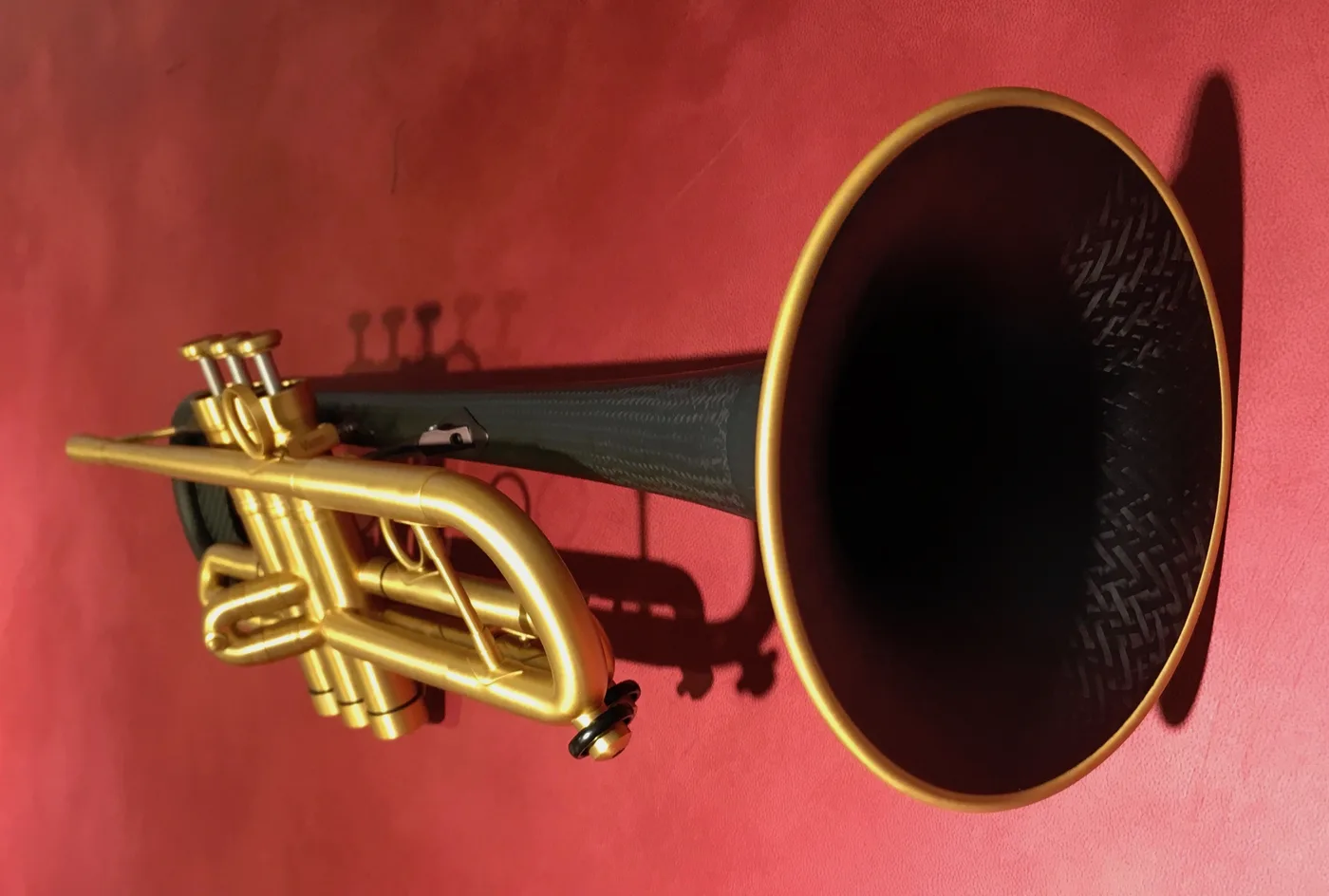
Players love that buzz. It tells you the horn is alive. But it isn't free. That buzz is the metal of your horn moving, and moving metal takes energy. It's energy you put in with every note, and it never reaches the audience.
This isn't a sales idea. Acoustics researchers have measured it many times. The physicist Thomas Moore, who studies brass instruments, wrote in 2016 that the old player belief "has been shown to be true in the case of bell vibrations."
You've felt this before, even if nobody named it. Heavy horns, heavy valve caps, heavy mouthpieces: players pay extra for them because they feel more solid. Part of what that weight may do is calm the metal down.
Andi Keller found a different way.
The man who made machines quiet
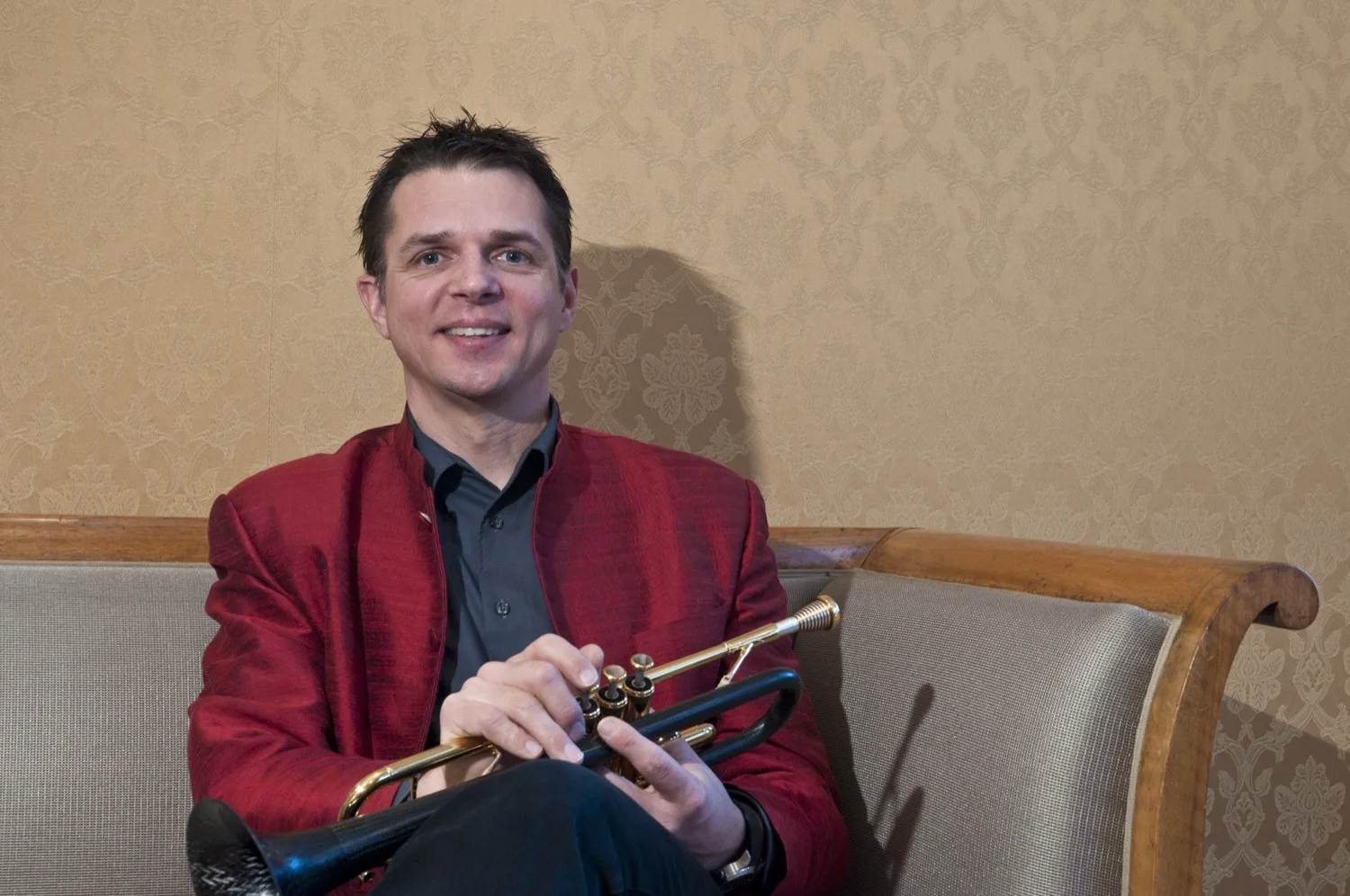
Andi Keller has played the trumpet since he was a child. But he didn't start out making instruments. He's a materials scientist. He studied composite materials, spent seven years in research, and then ran a development department in industry with one job: make loud machines quiet.
You do that by stopping the parts from vibrating. A part that vibrates wastes energy.
So he wondered if the same idea would work on a trumpet bell.
He could not make an instrument himself. For a year he told his idea to anyone who would listen. Then he met Werner Spiri, one of the best-known wind instrument makers in Switzerland. After ten minutes, Spiri said: let's do it.
They started with plain straight tubes of glass fibre, carbon fibre and brass, side by side. Carbon came closest to brass, which was exactly the point: it should still sound like a trumpet, just be easier to play. With carbon, Andi can set the stiffness and the mass of the bell spot by spot, so it barely moves where a brass bell would.
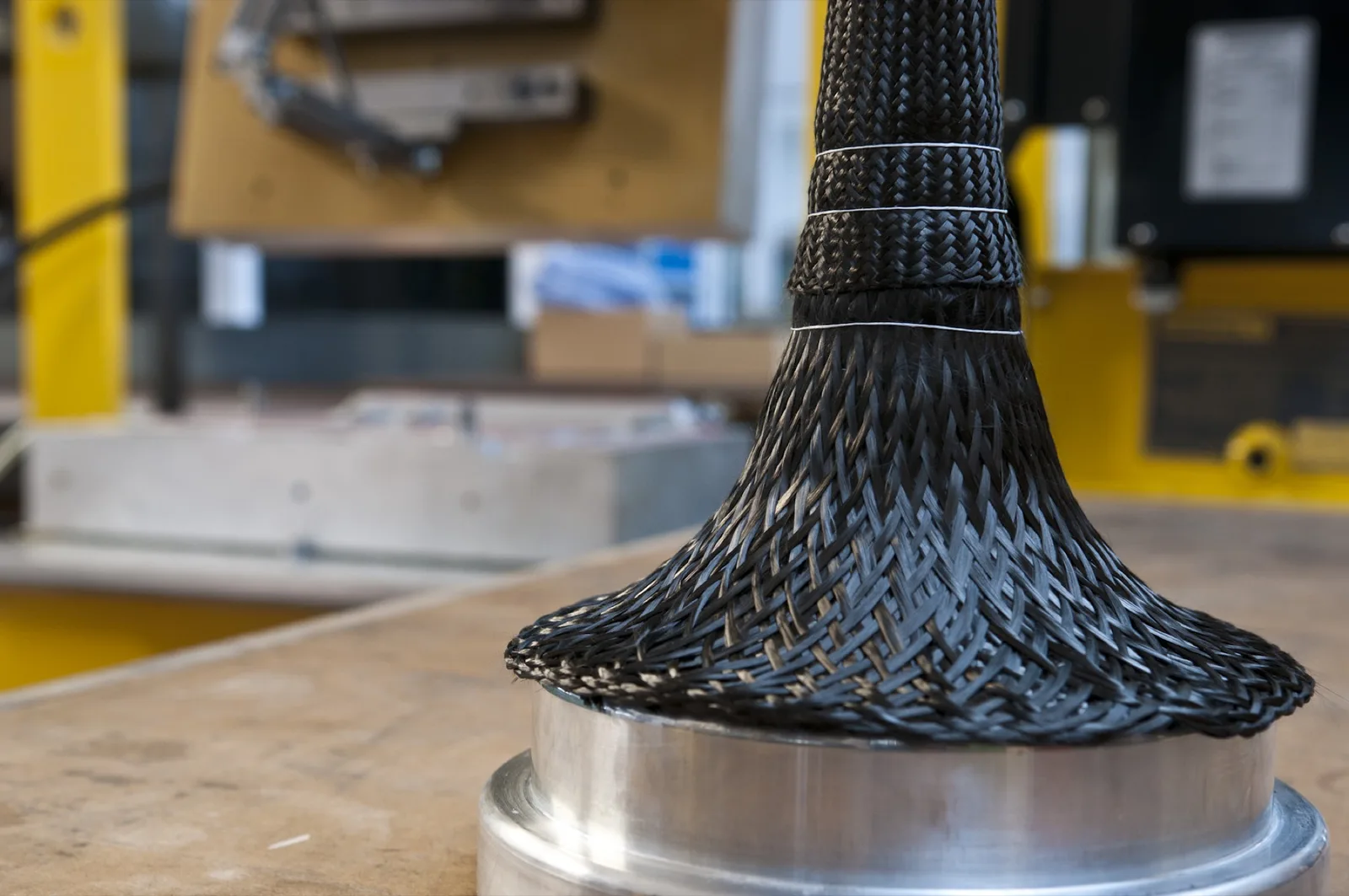
Where a brass bell vibrates and loses energy, the carbon bell stays still.
What changes for you
1. The same note costs you less
About 10 percent less energy for the same result. Measured in the lab. The test used the same trumpet, once with a brass bell and once with a carbon bell. Ten percent isn't magic, and we won't pretend it is. What it means for your playing, no lab can tell you. Andi puts it simply: "Less energy for the instrument means more energy for the music."
Source: Vereecke and Kausel, International Trumpet Guild Journal, 2012.
2. Andi's main point: the horn answers sooner
Remember the soft entries that stop speaking late in the night? This is the part Andi cares about most. In his video on the benefits, he says the bigger effect is not the 10 percent. The horn reacts faster, and even when you play away from the centre of the note, there is enough energy to start it. That, he says, gives you trust in the instrument, and a player who trusts the instrument plays more relaxed. Nobody has run a study on tired lips. What you can test is how your own last set feels.
3. Your audience hears a trumpet
Nobody hears the difference. In a blind test, listeners could not tell carbon from brass. We make no promise about sound. It sounds like a trumpet, because that was the whole point. The difference is on your side of the mouthpiece.
4. No dents, no corrosion, no re-lacquering. Warm in seconds.
That helps in a cold church or at an outdoor gig.
5. Tougher than it looks
"It won't dent, but won't it crack?" is the first thing people ask. Five times stronger than it needs to be. None has broken since 2009. One bell was run over by a car and survived.
"But I like feeling the horn in my hands"
That's fair. On a daCarbo you feel less of the bell buzzing, because that's the point. Some players need a few days to get used to that, and some never do. That's one of the things to find out in your 30 days.
"I thought it would sound like plastic"
It's a fair first thought. One concert band player in the US expected carbon to sound like a plastic trumpet. Then a friend brought his Large to rehearsal, and he was "completely surprised at how well it played, how easily it responded."
Plastic horns are made to be cheap and tough. For a beginner or a horn you take to the beach, they do that job well. A daCarbo was made for a different job: the player's effort. Carbon, not because it is lighter. Because the bell stays still, warms up in seconds and does not dent or corrode. A Unica weighs 1.03 kg.
Players who earn their living with a horn use one too. London trumpeter Quentin Collins: "Even if I was a vintage trumpet freak, I instantly loved the daCarbo instruments when I picked them up!"
You may feel nothing special on day one
TrumpetScout, an independent tester, felt nothing special on the first day. After a few days, his soft entries and high notes were more reliable.
The change is small. Give it more than one rehearsal.
Is it right for you?
Maybe not, and Andi will tell you so.
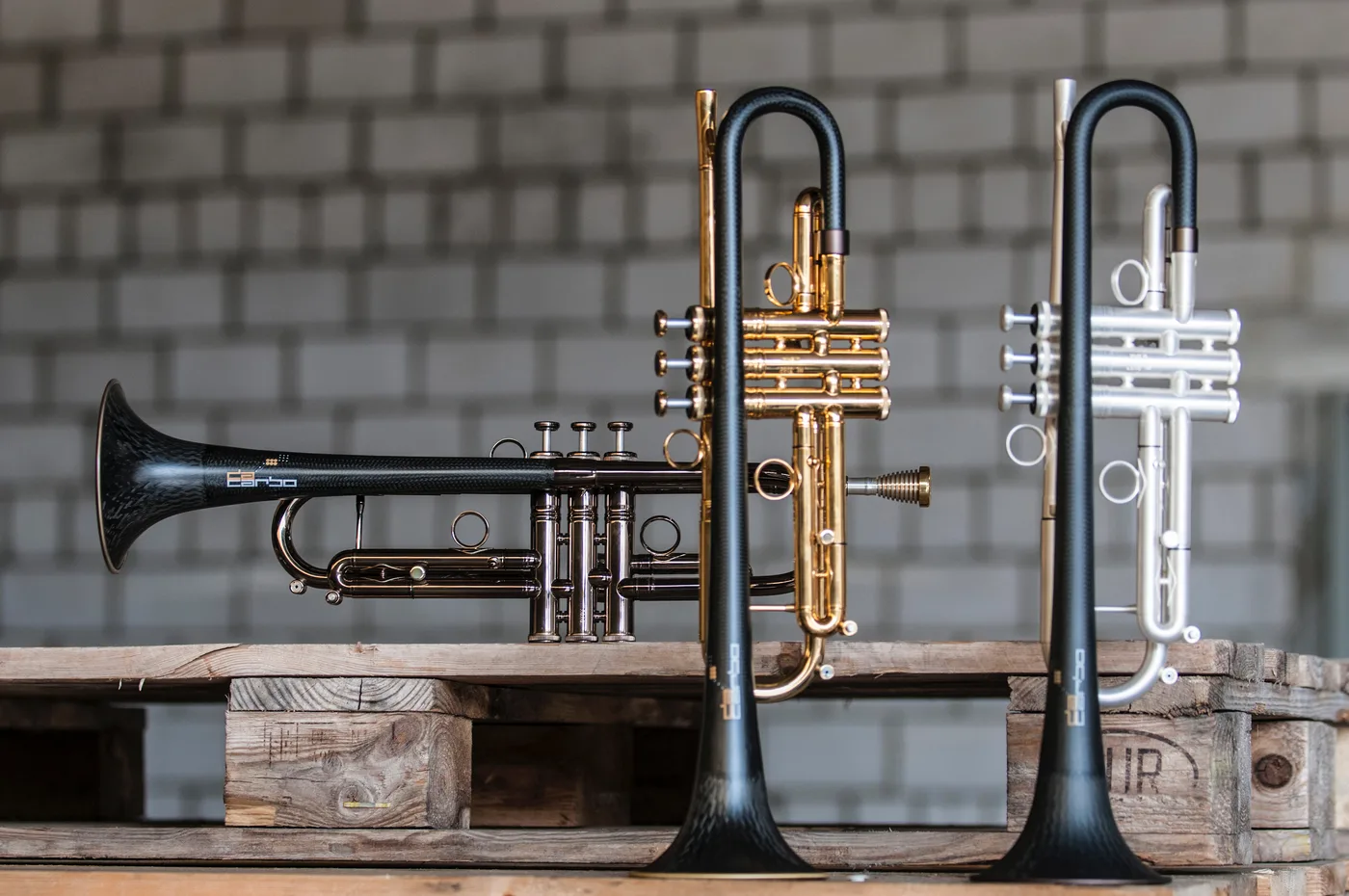
There are four trumpets, from bright to full: the ChangeMaker (the way in, from €2,990), the Unica (the all-rounder: if you only try one daCarbo, try this one), the Toni Maier (warm, open) and the Large (full, very open). Plus a flugelhorn. The price includes tax, customs duty and shipping. Nothing is added when it arrives. Which one suits you depends on how you play, and nobody can tell that from a web page.
One thing to know: the 10 percent was measured with a daCarbo bell, not a ChangeMaker bell, so we don't claim that number for the ChangeMaker.
Want to hear it from Andi first? He explains the bell in a short video on his YouTube channel: 5 Benefits.
Then the next step is a free 30-minute video call with Andi, in English, German, French or Italian. Have your trumpet and a phone or laptop with you. You play a little for Andi and tell him about yourself, your band and where you run out. Andi recommends an instrument. He also says straight out if none of them suits you. Not ready for a call? Write to him first at info@dacarbo.ch.
That matters. One daCarbo owner wrote on a trumpet forum that he loved his, then found he had to work harder than he wanted above the staff: "Great horn, but didn't quite fit me." That's exactly what the call is for. No shop near you? Ask Andi. Where a try can be arranged, he arranges it.
You have 30 days to send it back from the day it arrives. Custom builds aren't included, and you pay the return shipping.
The Unica, the Toni Maier and the Large are handmade in Switzerland. Andi assembles and tests every instrument in Lachen.
Two ways from here
You can keep doing what you're doing. More long tones, another mouthpiece, more rest days. Many good players do exactly that, and it works for them.
Or you can find out whether part of what you've been fighting all these years is the bell in your hands. Start with the two-finger test at your next rehearsal. If you want to know more, talk to the man who has spent his working life stopping parts from vibrating: book a free call with Andi.
Sources
- Vereecke, H. and Kausel, W.: "Carbon Fiber Reinforced Polymer, an Alternative to Brass?", International Trumpet Guild Journal, October 2012, pages 41 to 43
- Moore, T. R.: "The Acoustics of Brass Musical Instruments", Acoustics Today 12(4), 2016
- Andi Keller, "5 Benefits" (video on his YouTube channel)
- TrumpetScout, independent review of the daCarbo Toni Maier and Unica (2017)
- Trumpet Herald, thread "DeCarbo ?", a concert band player's experience with a daCarbo Large and Unica (2020 to 2022)
- daCarbo, how the bells are made and how daCarbo started
- daCarbo, home page (the call, the 30 days, prices including tax, customs duty and shipping)