The short answer
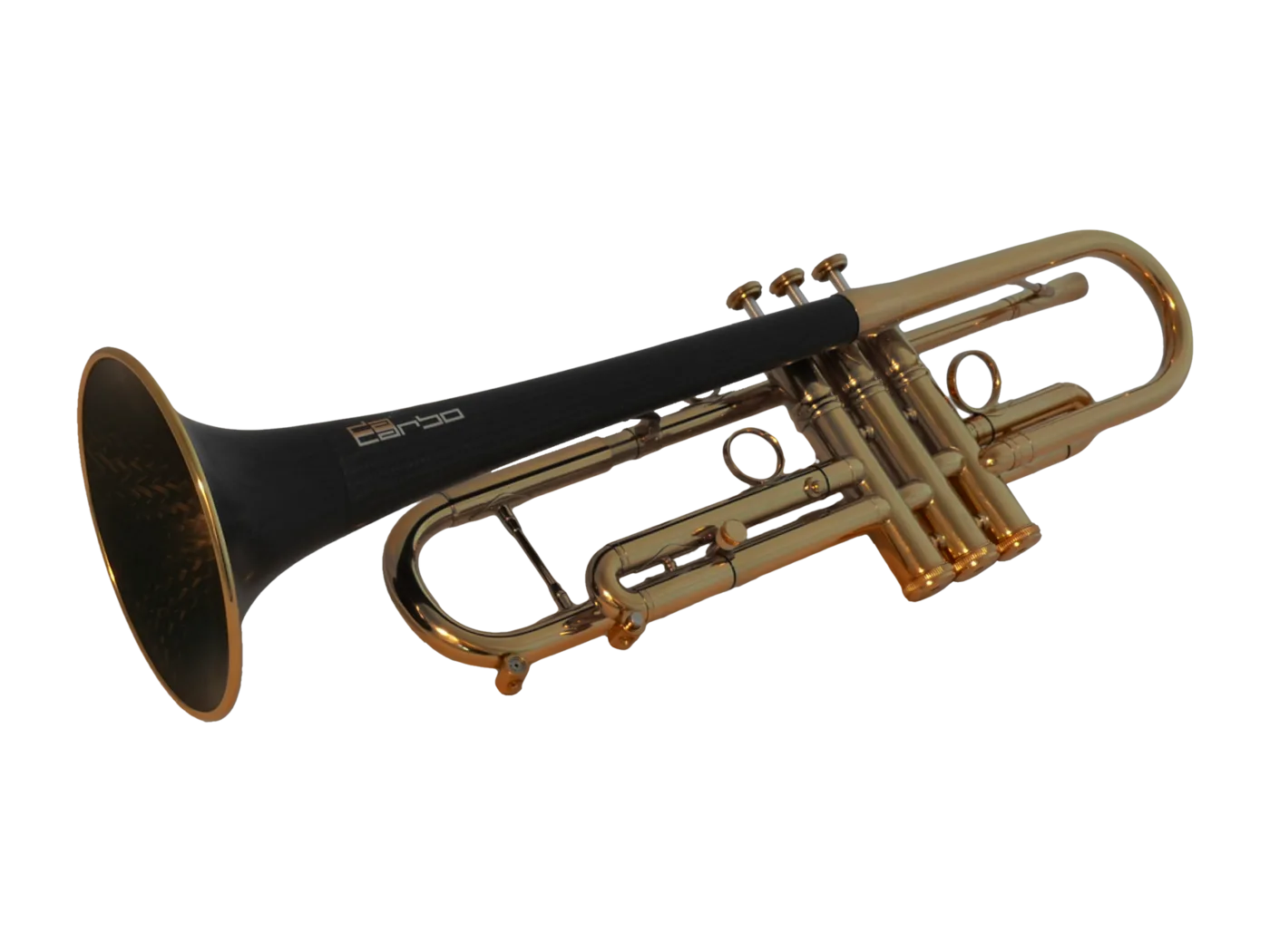
You pick up a carbon trumpet for the first time, and your arm gets ready for a feather. Then it weighs what a trumpet weighs. So no, not in any way you'd notice: a carbon fiber trumpet from daCarbo weighs about what a brass trumpet weighs. The Unica weighs about 1.03 kilograms, the Toni Maier and the Large about 1.1 kilograms. That is on purpose. The carbon bell is made so that it barely vibrates when you play, not so that it weighs less. If low weight is what you need most, a daCarbo is not made for that.
Why you expected a feather
Maybe you typed "lightweight trumpet" into a search box, and carbon came up. Maybe a shop listing or a search summary told you a carbon trumpet is lighter. Or you held one at a fair and it surprised you.
It's a fair guess. Racing bikes and tennis rackets are made of carbon because every gram counts there. So the question keeps coming up in forum threads about daCarbo. On a trombone forum, one player asked it straight out: "Are the DaCarbos not light?" A trumpet player on another forum guessed the other way: "I guess it makes the horn lighter, but really they don't weigh that much to begin with."
He's right about the second part. A trumpet doesn't weigh much to begin with, and a carbon one weighs about the same.
What a daCarbo trumpet weighs
Here are the numbers from Andi Keller, the founder of daCarbo, next to two brass trumpets from Yamaha.
| Trumpet | Weight |
|---|---|
| daCarbo Unica | about 1.03 kg |
| daCarbo Toni Maier | about 1.1 kg |
| daCarbo Large | about 1.1 kg |
| Yamaha YTR-2330, brass | 1.09 kg (listed by Thomann) |
| Yamaha YTR-4335GII, brass | 1.09 kg (listed by Thomann) |
Both are good brass trumpets. Yamaha says the YTR-2330 has a balanced weight and an adjustable trigger on the third valve slide, so your hand sits naturally, and that the YTR-4335GII has a free-blowing feel. Next to them, the daCarbo trumpets differ by 60 grams or less, one way or the other. The numbers come from different scales, so take them as a rough guide. But the answer is clear: on the scale, a carbon trumpet is a trumpet.
An instrument maker who held one of the carbon bells at a fair in 2011 found the same. He wrote on the German trumpet forum that it felt neither lighter nor heavier than a metal bell.
Why daCarbo didn't make it lighter
A carbon bell could weigh much less. Here is why it doesn't.
Andi Keller is a materials scientist. His job was making loud machines quieter, by stopping their parts from vibrating. He has also played the trumpet since childhood. One day he saw that a trumpet has the same problem.
Every note you play is a vibration inside the instrument, and a brass bell vibrates along with it. You cannot hear that part: it is energy you put in that never becomes sound. Brass players have tried to calm the metal for a long time, with heavier bells, heavy valve caps and heavy mouthpieces.
With carbon, Andi can set the stiffness and the mass of the bell spot by spot, so it barely moves where a brass bell would. That takes a certain amount of mass. In one of his videos he says it plainly: "we had to add some weight for acoustic reasons." He compares it with a carbon bike frame. A bike frame is made to weigh as little as possible. A daCarbo bell is not.
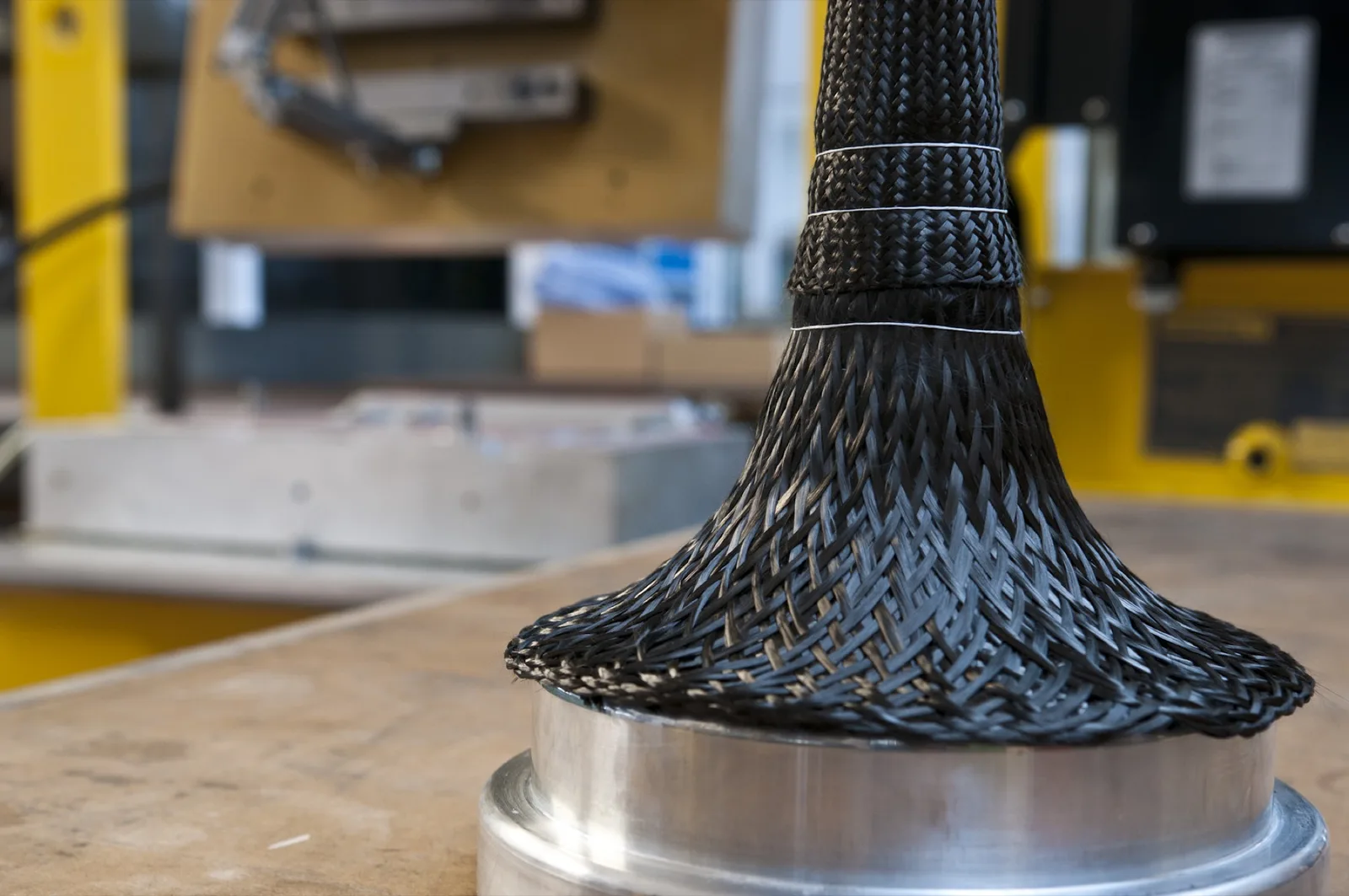
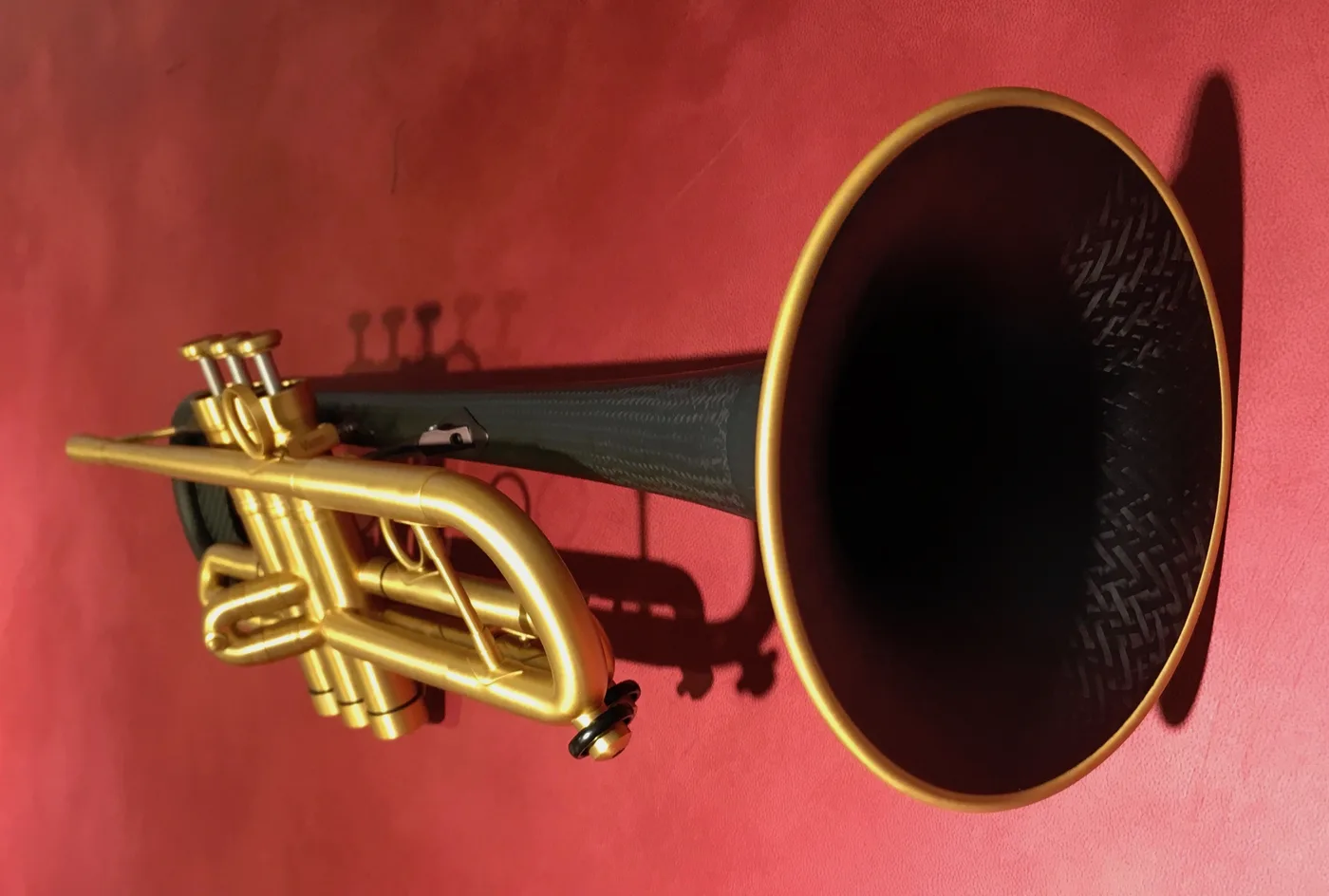
The bells are built for sound, not for low weight. That makes them about five times stronger than they need to be. None has broken since 2009.
And on a daCarbo trumpet, only the bell is carbon. The valves and the tubing are metal, as on any trumpet. The Toni Maier and the Large even have a heavy valve section.
What the carbon is for
Carbon, not because it is lighter. Because the bell barely vibrates, warms up in seconds and does not dent or corrode.
The first point is the reason daCarbo exists. About 10 percent less energy for the same result. Measured in the lab. The test used the same trumpet, once with a brass bell and once with a carbon bell. (Source for the 10 percent: Vereecke & Kausel, International Trumpet Guild Journal, 2012.) What that means for your playing, no lab can tell you. TrumpetScout, an independent tester, felt nothing special on the first day. After a few days, his soft entries and high notes were more reliable.
And the sound? Before the first trumpet, daCarbo tested plain tubes of glass fibre, carbon and brass. Carbon came closest to brass, which was the point: it should still sound like a trumpet. In a blind test, listeners could not tell carbon from brass.
You may notice one thing yourself: because the bell barely vibrates, you feel less vibration in your hands. Some players need a few days to get used to that.
If weight is your real problem
Some players want less weight for a good reason: a sore shoulder, or tired arms after a long service or a long gig. If that's you, be honest with yourself. A daCarbo trumpet won't take weight off your arms. Ask Andi on the call how it compares with the trumpet you play now. He also says straight out if none of them suits you.
On the trombone: the outer slide
On the trombone, one part is different. The carbon outer slide is lighter than a brass slide. It moves more smoothly, and quick slide changes take less effort. The balance stays the same in every slide position. Your left hand can stay much more relaxed than on a standard trombone.
That's the outer slide, not the whole trombone and not the bell. A daCarbo trombone owner put it this way on a trombone forum: "The DaCarbo is not exactly light ... the focus here is definitely more on acoustics rather than lightness." All three trombones and their prices: dacarbo.ch/carbon-fiber-trombone.
Check it yourself
Two checks, both free. Put your own trumpet on the kitchen scale and compare: about 1.03 kilograms for the Unica, about 1.1 for the Toni Maier and the Large. Then play a long note and rest two fingers on your bell. Feel the buzz? That buzz is the reason daCarbo uses carbon. There's more on it in the article on endurance, and the whole comparison is in carbon fiber trumpet vs brass.
The Unica starts at €3,990, the Toni Maier at €6,590 and the Large at €7,990. The price includes tax, customs duty and shipping. You have 30 days to send it back from the day it arrives.
All instruments and prices: dacarbo.ch
Sources
- Vereecke, H. and Kausel, W.: "Carbon Fiber Reinforced Polymer, an Alternative to Brass?", International Trumpet Guild Journal, October 2012, pages 41 to 43
- daCarbo, the story (how the bells are made, built for sound, not for low weight)
- Andi Keller, FAQ video 5: What are the benefits? ("we had to add some weight for acoustic reasons")
- Andi Keller, FAQ video 8: Can they be repaired? (the bike frame comparison, the trombone outer slide)
- Thomann, Yamaha YTR-2330 Bb trumpet, weight 1.09 kg (checked 9 November 2026)
- Thomann, Yamaha YTR-4335 GII Bb trumpet, weight 1.09 kg (checked 9 November 2026)
- Yamaha, YTR-2330 overview (checked 9 November 2026)
- Yamaha, YTR-4335GII overview (checked 9 November 2026)
- Trompetenforum, thread "Carbon Schallbecher", post by an instrument maker, 8 April 2011
- TrumpetScout, independent review of the daCarbo Toni Maier and Unica (2017)
- daCarbo, carbon fiber trombones