The short answer
A daCarbo flugelhorn is a flugelhorn with a carbon bell and bell tube. The valves and the rest of the tubing are brass. It comes in gold lacquer gloss from €4,690 and gold lacquer matt from €5,310, both with a full leather bag that holds a flugelhorn and a trumpet. What changes is the bell: a brass bell vibrates with every note, a carbon bell barely does.
If you're new to the flugelhorn: it's a B-flat brass instrument with the same fingering as a trumpet, so a trumpet player can pick one up and play it. The difference is the shape: a wider, mostly conical bore, a much bigger bell and a deeper, funnel-shaped mouthpiece. That gives it the softer sound you know from jazz ballads and from the melody line of a wind band.
You know the moment
The chart says "flugelhorn" and you have a few bars to switch. The big band slows down for the ballad, and the soft entry has to be there the first time, on a horn that has been sitting on its stand for an hour.
Or you sit in the flugelhorn section of a wind band, and the slow piece is yours. Or it's a quiet hymn in a cold church, where a trumpet would be too bright. One German player described three days of a village festival: marches on first flugelhorn by day, dance music on first trumpet at night. And some players come back to the horn after years away and pick the flugelhorn, simply because they love that sound.
Flugelhorn or trumpet: what's really different
Same key and the same fingering. Everything else comes from the shape.
- Bore and bell. On a trumpet, much of the tubing is cylindrical. On a flugelhorn the valves sit close to the mouthpiece, and most of the tubing after them keeps widening into the bell. Flugelhorn bells run from about 130 to 170 mm. The daCarbo bell is 170 mm (6.69"), the big end of that range.
- Sound. Softer than a trumpet. That's why charts ask for it in ballads, and why it won't cut through a loud band the way your trumpet does.
- Mouthpiece. A flugelhorn mouthpiece has a deep, V-shaped cup and a different shank. Flugelhorn receivers come in several sizes (small, large, French), so check the fit before you buy one. Many doublers use a flugelhorn mouthpiece with the same rim as their trumpet mouthpiece. Douglas Yeo, for many years bass trombonist of the Boston Symphony, gives the same advice for any instrument you double on.
- Tuning. On many flugelhorns you tune by sliding the leadpipe, because the conical bore leaves no good spot for a main tuning slide. Low notes with all three valves run sharp, and the top register is harder to play clean and in tune than on a trumpet. Your ear does more of the work.
When do you double? Wherever a big band or jazz chart asks for it, mostly ballads and soft solos. In many wind bands the flugelhorns are their own section and carry the melody, and a British-style brass band has one flugelhorn seat. In church, it's the instrument for a quiet hymn where a trumpet would be too much.
What a carbon bell changes
None of that is about carbon. Your flugelhorn sound comes from you, your mouthpiece and the shape of the horn, and practice matters most. A carbon bell changes one thing.
Next time you play a long note, rest two fingers on your bell. Feel the buzz? That buzz is your bell vibrating along with the note. You cannot hear that part: it is energy you put in that never becomes sound. Acoustics researchers found that this wall vibration matters where the tube flares, in the bell, and hardly at all in straight tubing.
On the daCarbo flugelhorn, the bell and the bell tube are carbon. Andi Keller, the founder of daCarbo, is a materials scientist who used to make loud machines quiet by stopping their parts from vibrating. With carbon he can set the stiffness and the mass of the bell spot by spot, so it barely moves where a brass bell would.
About 10 percent less energy for the same result. Measured in the lab. The test used the same trumpet, once with a brass bell and once with a carbon bell. On a flugelhorn, nobody has measured it. What that means for your playing, no lab can tell you. TrumpetScout, an independent tester, played two daCarbo trumpets. He felt nothing special on the first day. After a few days, his soft entries and high notes were more reliable. How the measurement came about is in our article on the carbon fiber trumpet.
And the sound? On a flugelhorn, that's the whole point. In a blind test, listeners could not tell carbon from brass. The player in the photo is Quentin Collins, who has played with Prince and Alicia Keys. In his words: "Even if I was a vintage trumpet freak, I instantly loved the daCarbo instruments when I picked them up!"
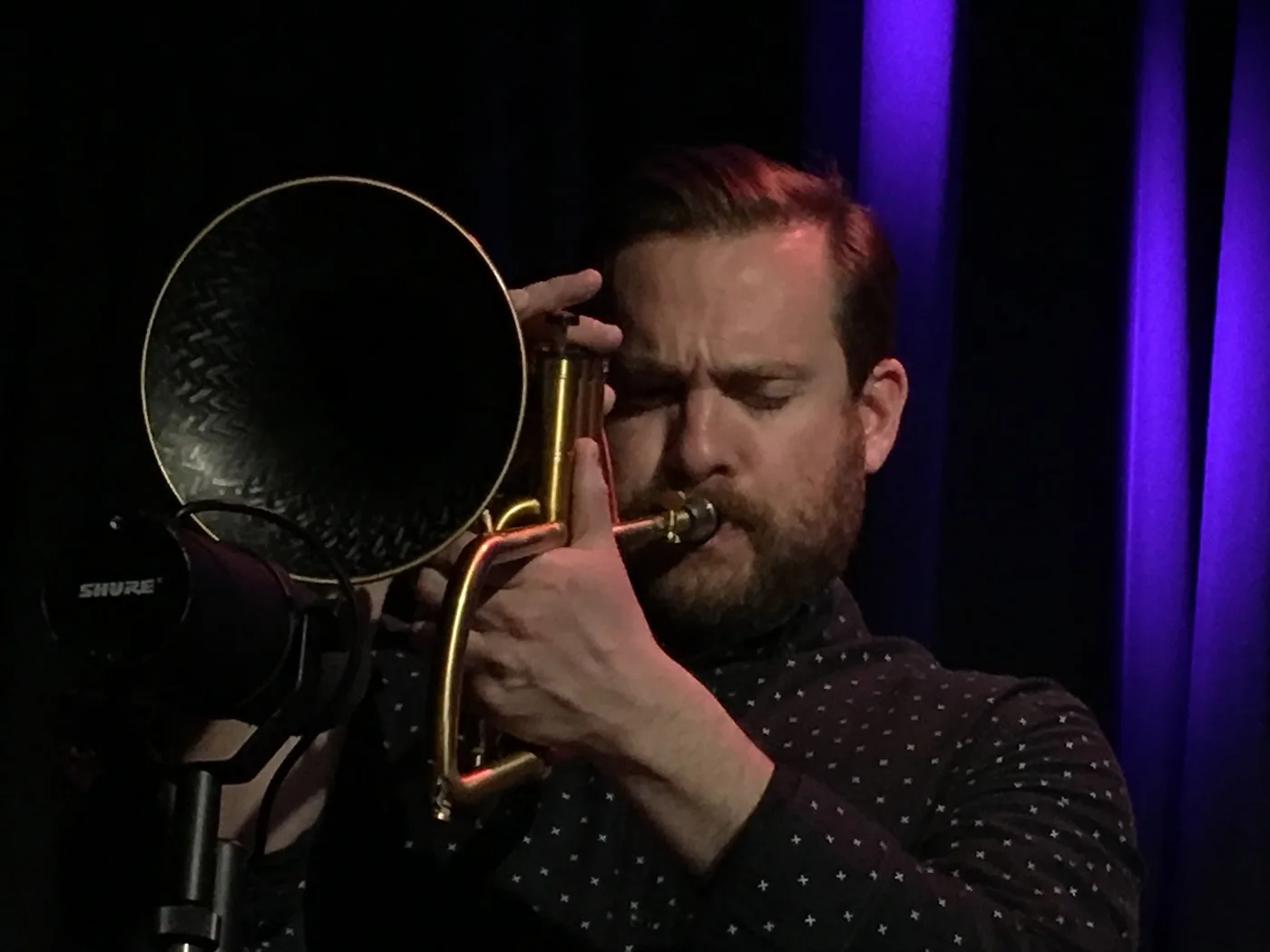
You may notice one thing yourself: because the bell barely vibrates, you feel less vibration in your hands. Some players need a few days to get used to that.
Gloss or matt: the two daCarbo flugelhorns
It's one instrument in two finishes. Full and clear on every note. The glossy gold lacquer is the classic look. The matt one reads darker on stage and does not show fingerprints, and it plays exactly like the glossy one.
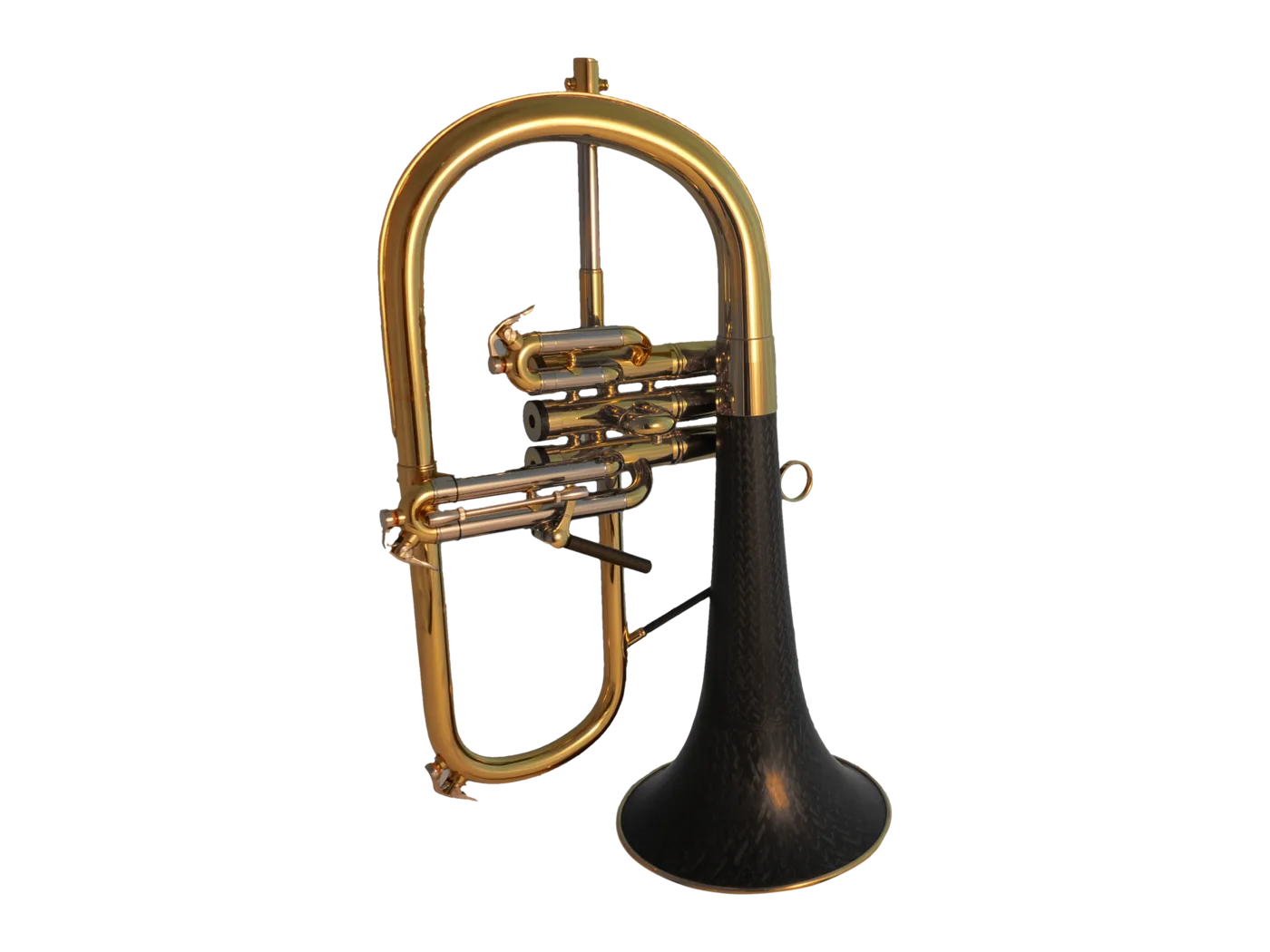
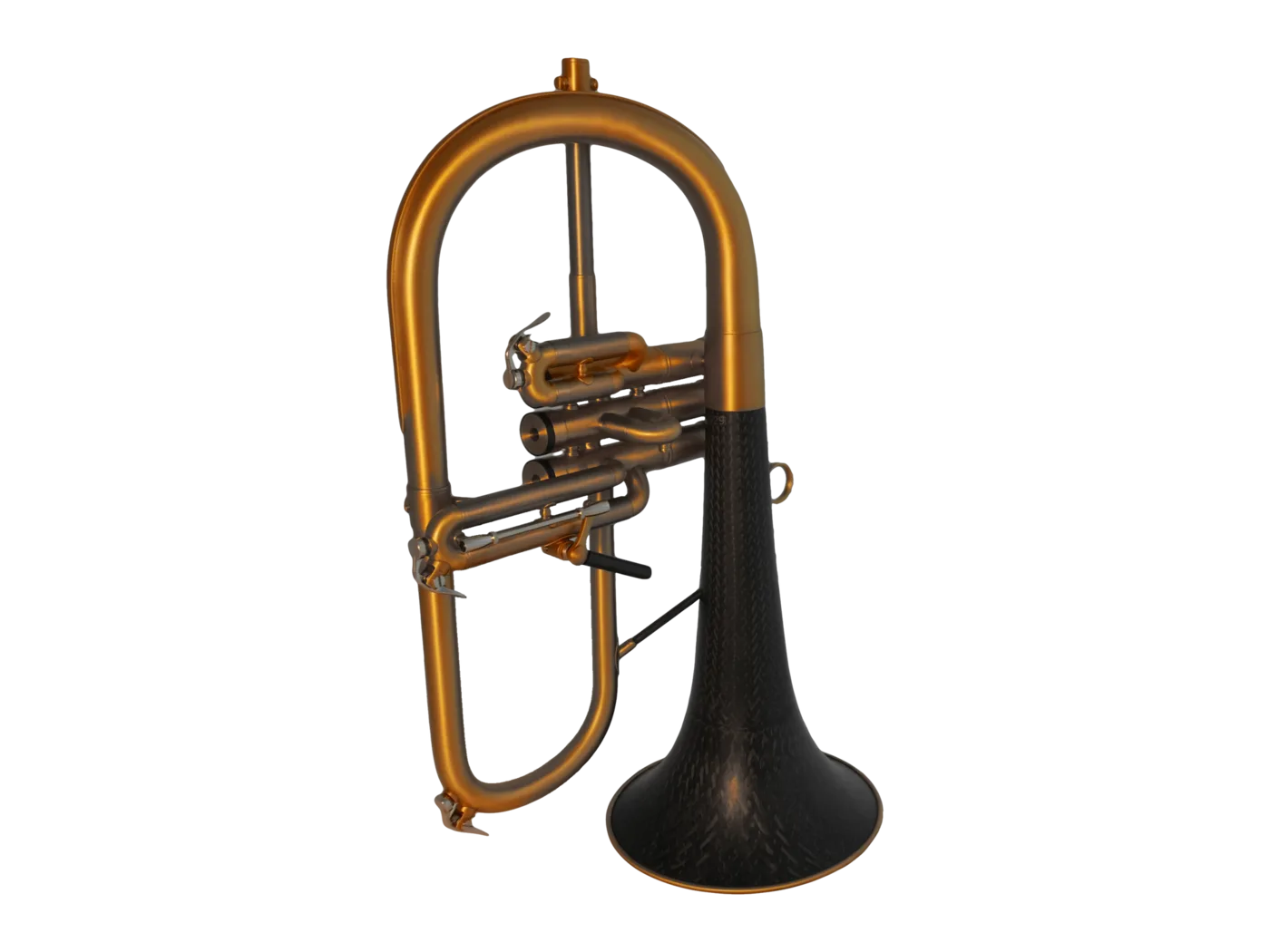
| Gold lacquer gloss | Gold lacquer matt | |
|---|---|---|
| From | €4,690 · CHF 4,390 · US$5,540 | €5,310 · CHF 4,950 · US$6,240 |
| Bell | Carbon bell and bell tube, 170 mm (6.69") | The same |
| Valves and bore | First-class piston valves, 11.0 mm | The same |
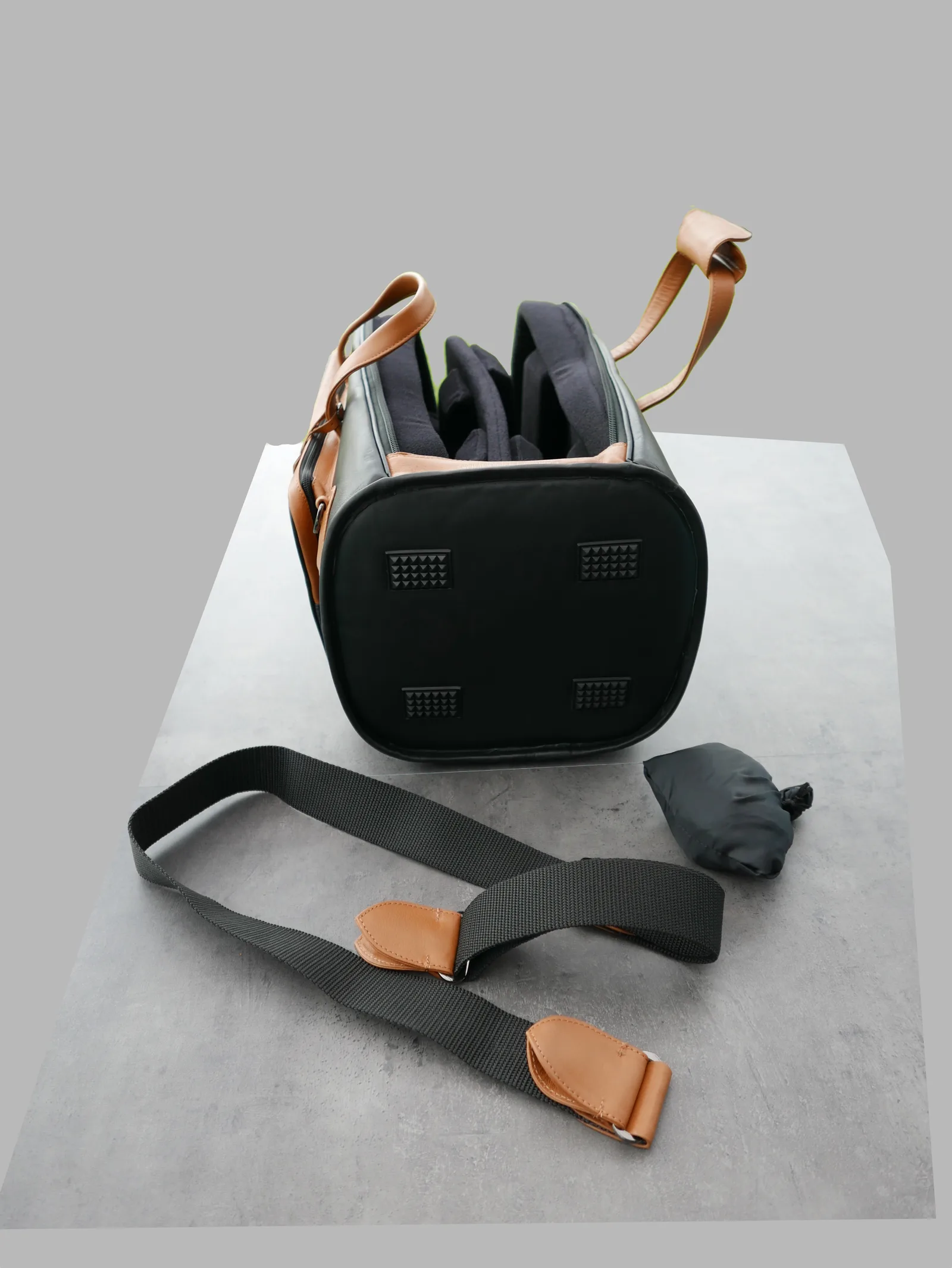
| In the box | Full leather bag for one flugelhorn and one trumpet | The same |
The price includes tax, customs duty and shipping. Nothing is added when it arrives. Andi assembles and tests every instrument in Lachen. If you double, the bag is worth a look: both horns go to the gig in one bag.
Who it's for, and who it isn't
The bell is the same for everyone. What else matters depends on where you play.
- If you double at gigs, the carbon bell does not dent when your flugelhorn gets knocked backstage or tips off its stand, and it never needs new lacquer. The brass parts can still dent, like on any instrument.
- If you play in a wind band, a brass band or in church, the bell is warm in seconds. Carbon does not conduct heat as well as brass, so the inside of the bell is warm almost at once. The brass tubing warms up like on any instrument.
- If your band plays rotary-valve flugelhorns, the German-style concert flugelhorn, ask your conductor first: the daCarbo has piston valves.
- If you want a new sound, a carbon bell won't give you one. It's still a flugelhorn.
How to test one: what to listen for
You can play one at a dealer (Thomann lists the gold lacquer flugelhorn), with Andi by appointment in Lachen, Switzerland, or at home with 30 days to send it back from the day it arrives. The three ways in detail.
- Bring your own flugelhorn mouthpiece, and check that the shank fits.
- Play a soft ballad phrase, once fresh and once after an hour of playing. Does the first note speak when you ask for it?
- Take a tuner to the low notes and to the top of your range.
- Play soft and loud. Our instruments page says it "behaves the same at every volume and in every register". Check exactly that.
- Record your own horn and the daCarbo, and let someone listen blind.
If you want to try it
The two-finger check is free: do it on your own flugelhorn at the next rehearsal.
Both flugelhorns and prices: dacarbo.ch/instruments
Not sure which one fits you? Andi helps you choose. You book 30 minutes with Andi. You play a little for Andi and tell him about yourself. Andi recommends an instrument. He also says straight out if none of them suits you. The call is free and commits you to nothing.
Sources
- Wikipedia: "Flugelhorn" (bore, mouthpiece, fourth valve, brass band)
- Wikipedia (German): "Flügelhorn" (bell sizes, tuning on the leadpipe, rotary-valve concert flugelhorn)
- Pickett, P.: "Flugelhorn Shank Size", Pickett Brass, 4 March 2026
- Yeo, D.: doubling FAQ (choosing a mouthpiece rim for a second instrument)
- Kausel, W., Zietlow, D. W. and Moore, T. R.: "Influence of wall vibrations on the sound of brass wind instruments", Journal of the Acoustical Society of America 128(5), 2010
- Vereecke, H. and Kausel, W.: "Carbon Fiber Reinforced Polymer, an Alternative to Brass?", International Trumpet Guild Journal, October 2012, pages 41 to 43
- TrumpetScout, independent review of the daCarbo Toni Maier and Unica (2017)
- daCarbo, flugelhorns and prices